Thaddeus Lubo
Looked After: Exploring Physiological Permission through a Speculative Health Screening Kiosk
Looked After is a speculative public wellness kiosk that asks a simple question: What happens when your body becomes the input for deciding what happens next?
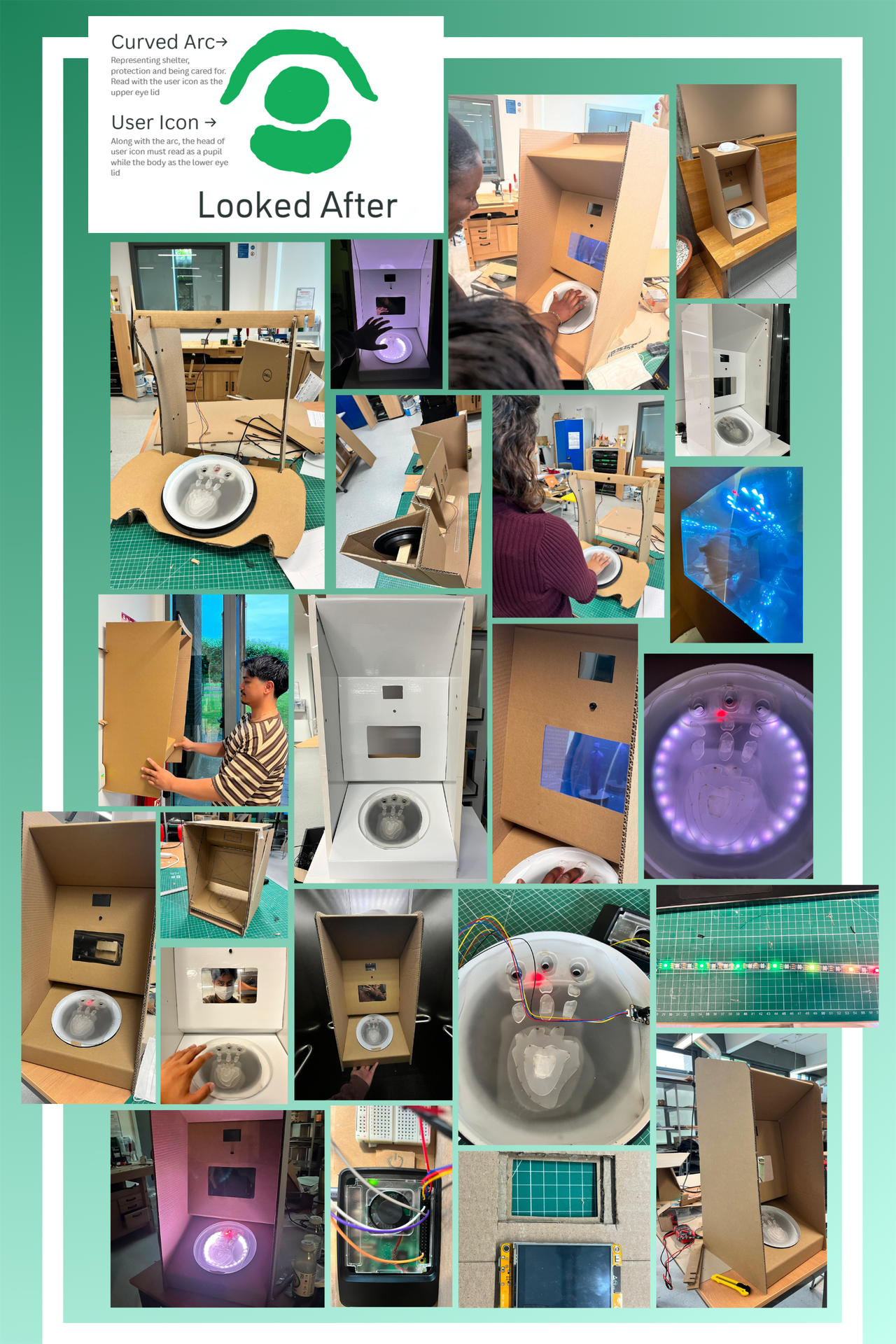
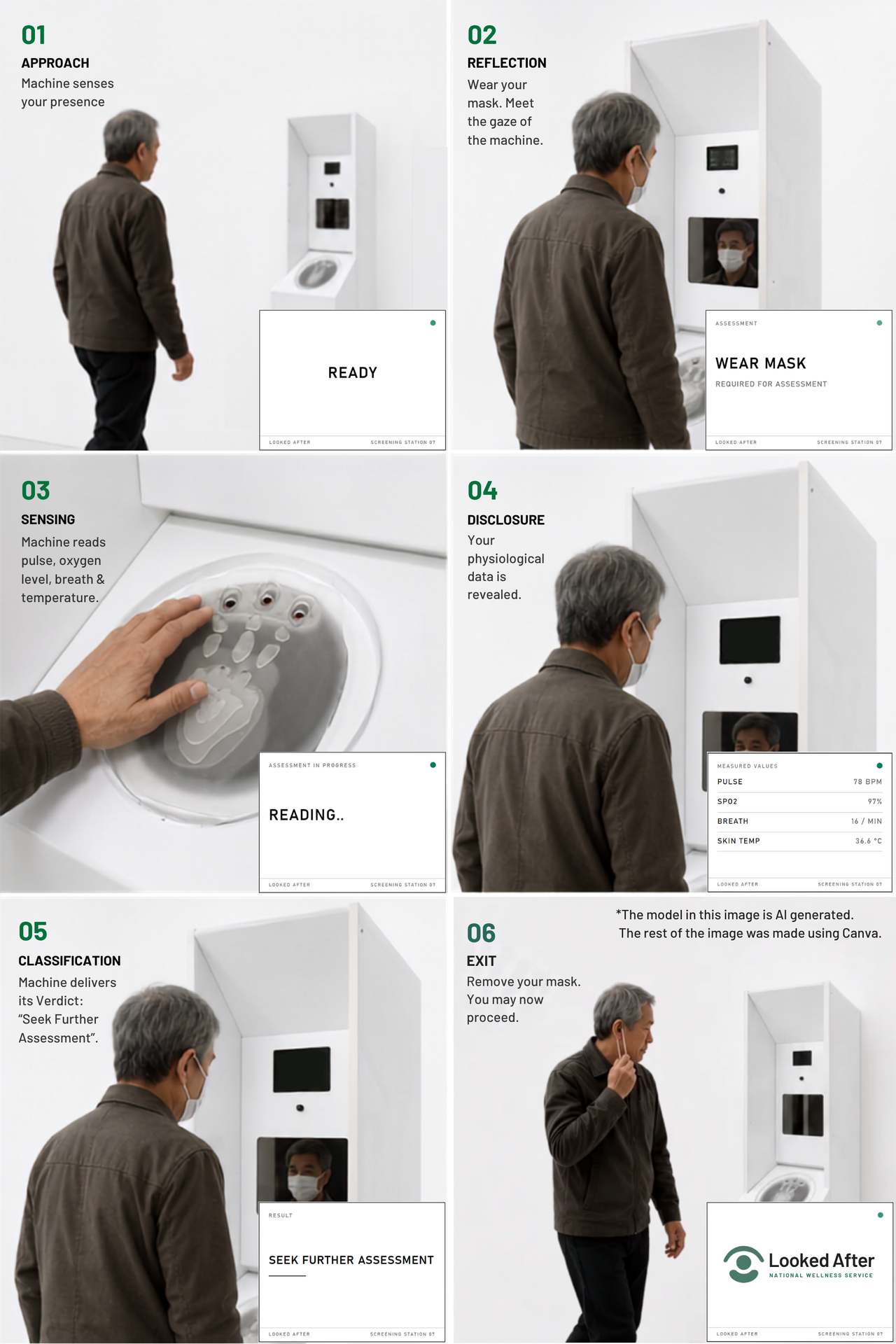
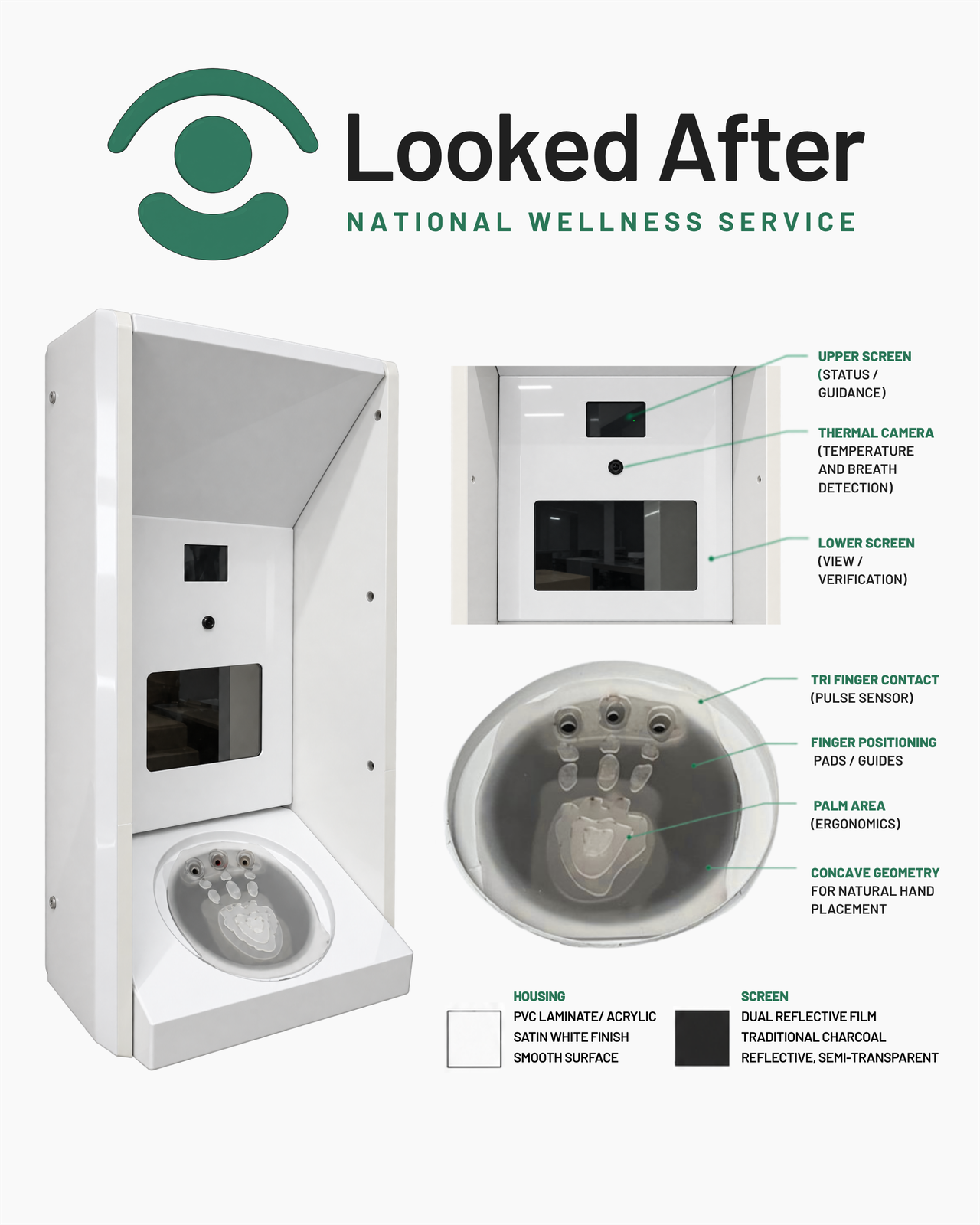
Presented as a familiar health-screening service, the kiosk reads pulse, blood oxygen, breath, and skin temperature. A thermal camera senses breath and temperature from a distance, while a hand rest measures pulse and blood oxygen. The visitor arrives already wearing a mask, which helps the system make the body readable. These signals are interpreted through four threshold models and produce one of three outcomes: Cleared, Inconclusive, or **Seek Further Assessment.
The project introduces physiological permission: when an involuntary bodily signal becomes grounds for a machine to decide what happens to a person. A pulse is not a command. A breath is not consent. Temperature is not a decision. The body produces the signal. The machine gives it authority.
Yet the kiosk does not present this authority as threatening. It presents itself as care. Soft tones, animations, restrained visuals, and supportive language make the assessment feel calm and familiar. The mask quietly establishes the conditions for participation before the verdict appears.
'Looked After' explores the tension between being 'looked after' and being 'looked at'. What happens when care and classification become part of the same interaction? And what should a machine be allowed to decide from signals the body never deliberately chose to give?
[NOTE: Could you please try in CMS editor this MARKDOWN format]
Looked After is a speculative public wellness kiosk that asks a simple question: What happens when your body becomes the input for deciding what happens next?
Presented as a familiar health-screening service, the kiosk reads pulse, blood oxygen, breath, and skin temperature. A thermal camera senses breath and temperature from a distance, while a hand rest measures pulse and blood oxygen. The visitor arrives already wearing a mask, which helps the system make the body readable. These signals are interpreted through four threshold models and produce one of three outcomes: Cleared, Inconclusive, or Seek Further Assessment.
The project introduces physiological permission: when an involuntary bodily signal becomes grounds for a machine to decide what happens to a person. A pulse is not a command. A breath is not consent. Temperature is not a decision. The body produces the signal. The machine gives it authority.
Yet the kiosk does not present this authority as threatening. It presents itself as care. Soft tones, animations, restrained visuals, and supportive language make the assessment feel calm and familiar. The mask quietly establishes the conditions for participation before the verdict appears.
Looked After explores the tension between being looked after and being looked at. What happens when care and classification become part of the same interaction? And what should a machine be allowed to decide from signals the body never deliberately chose to give?
[NOTE: This is HTML format if above doesn't work]
Looked After is a speculative public wellness kiosk that asks a simple question:
What happens when your body becomes the input for deciding what happens next?
Presented as a familiar health-screening service, the kiosk reads pulse, blood oxygen, breath, and skin temperature. A thermal camera senses breath and temperature from a distance, while a hand rest measures pulse and blood oxygen. The visitor arrives already wearing a mask, which helps the system make the body readable. These signals are interpreted through four threshold models and produce one of three outcomes: Cleared, Inconclusive, or Seek Further Assessment.
The project introduces physiological permission: when an involuntary bodily signal becomes grounds for a machine to decide what happens to a person. A pulse is not a command. A breath is not consent. Temperature is not a decision. The body produces the signal. The machine gives it authority.
Yet the kiosk does not present this authority as threatening. It presents itself as care. Soft tones, animations, restrained visuals, and supportive language make the assessment feel calm and familiar. The mask quietly establishes the conditions for participation before the verdict appears.
Looked After explores the tension between being looked after and being looked at.
What happens when care and classification become part of the same interaction?
And what should a machine be allowed to decide from signals the body never deliberately chose to give?