Christian Kenechukwu Anene
Perceived Safety: A Wearable Interaction Design Exploration
This project explores how wearable technology influences the way people think about safety. While many wearable devices promise reassurance through health tracking, location monitoring, and emergency alerts, this project asks a different question: does constant monitoring make us feel safer, or does it simply change how we think about risk?
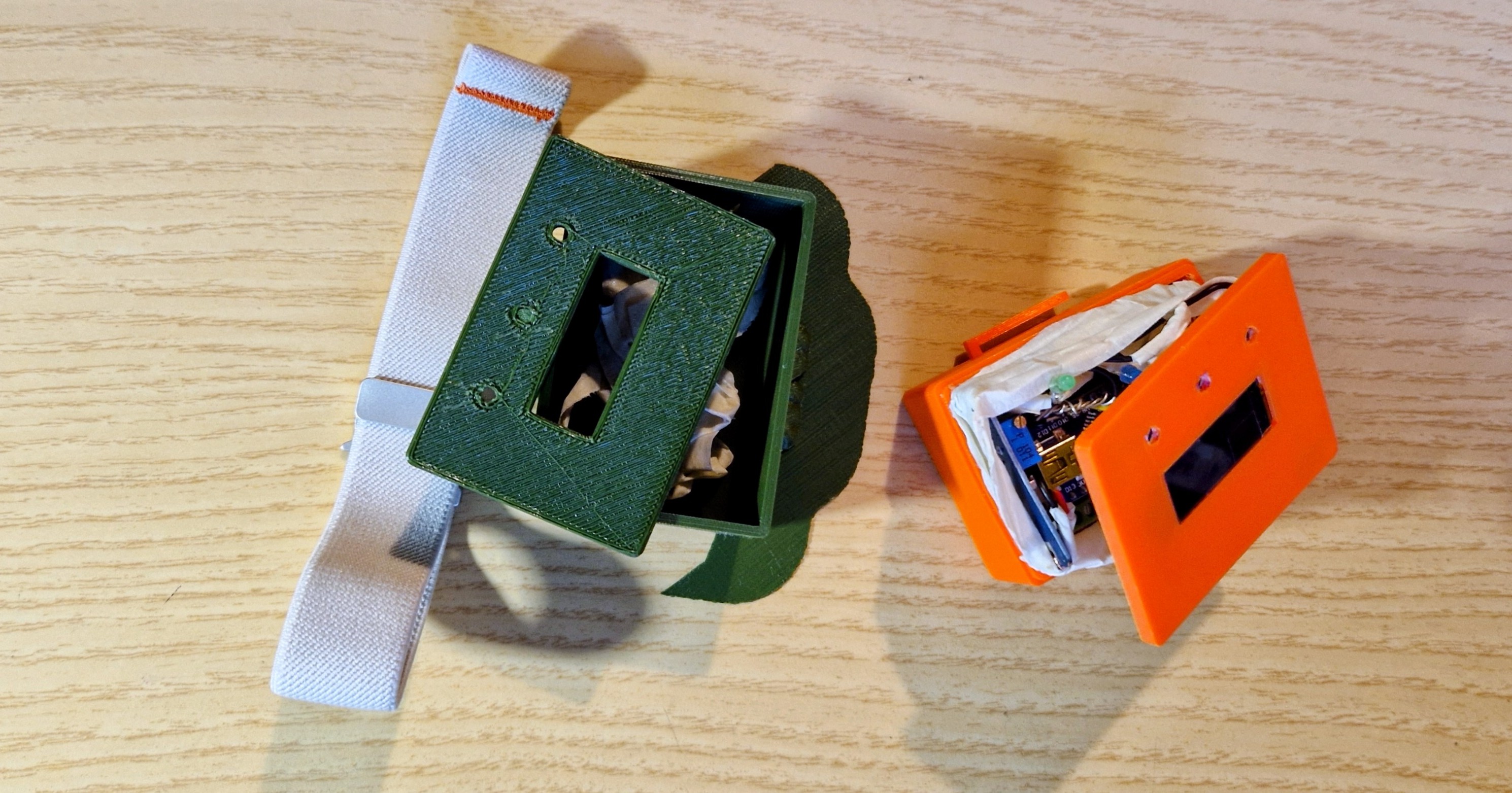
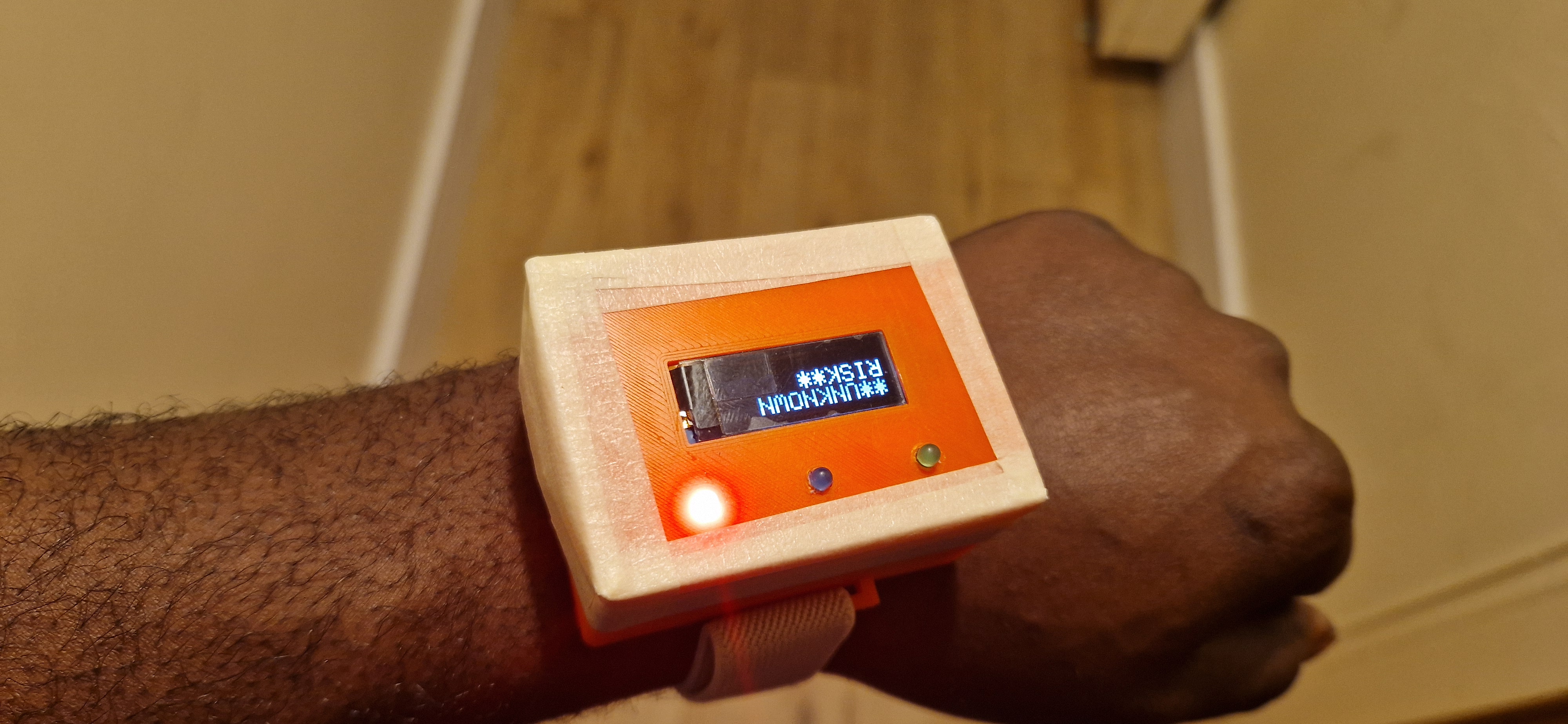
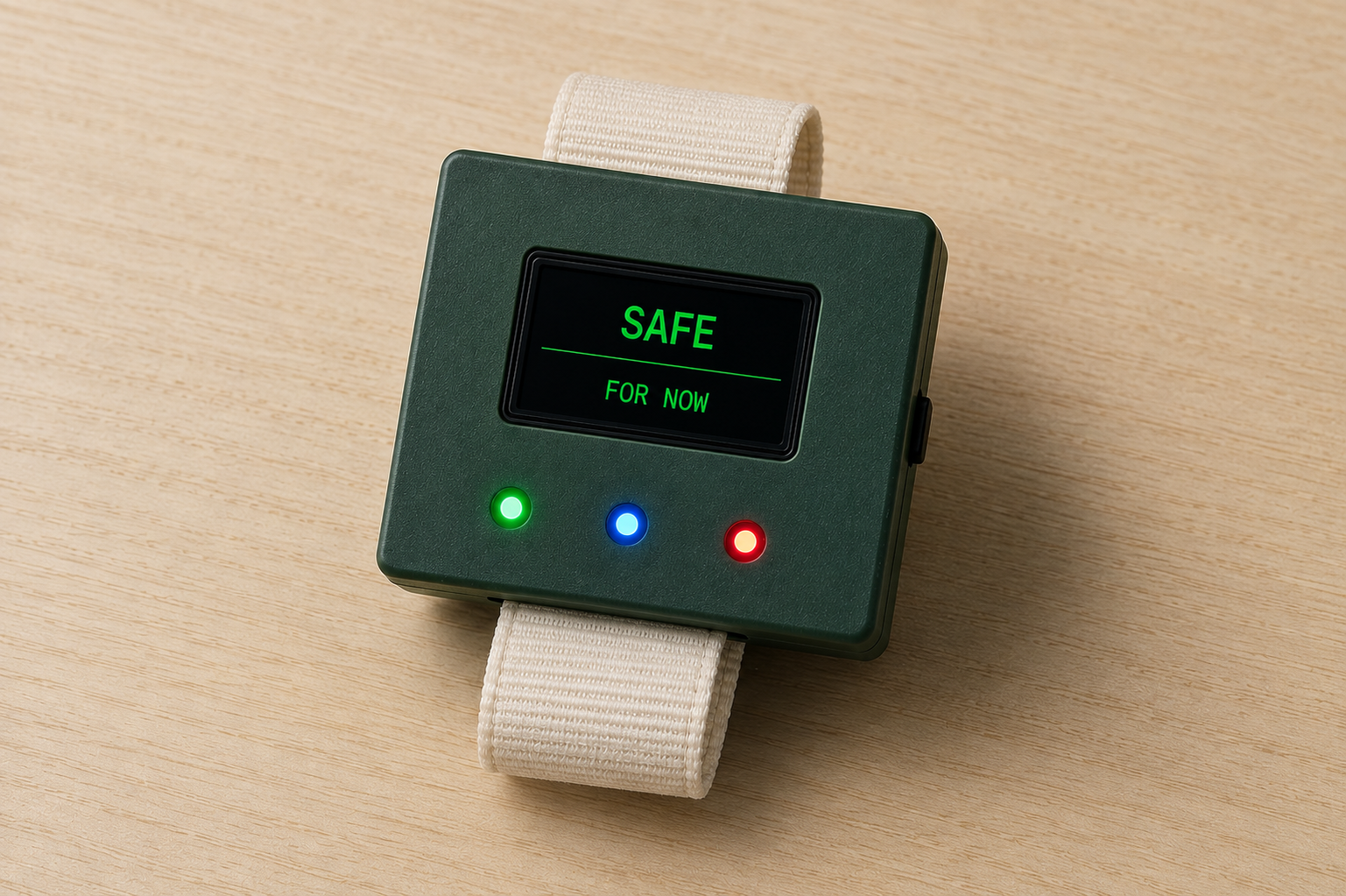
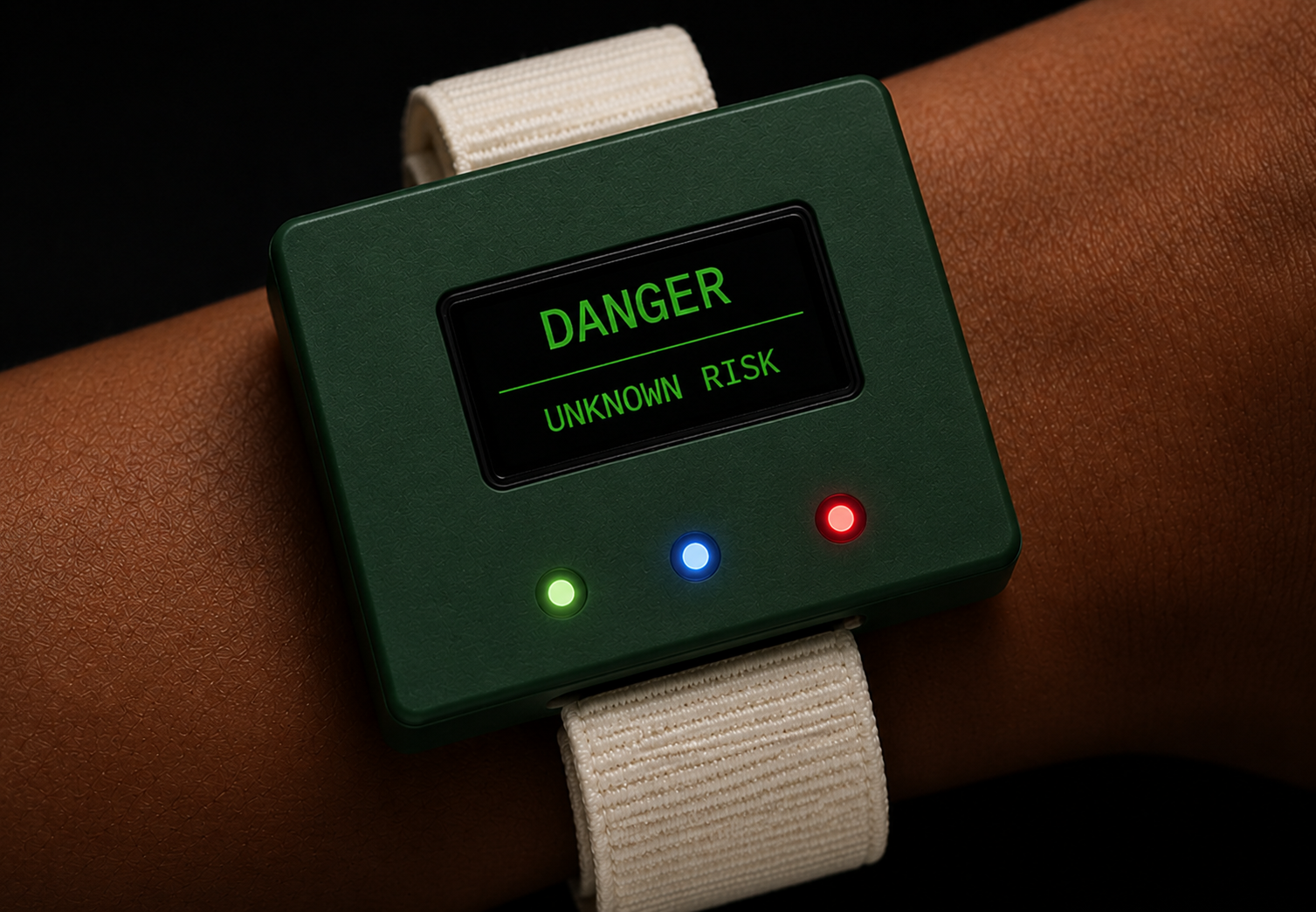
To explore this idea, I designed and built a wearable prototype using an Arduino Nano, an OLED display, coloured LEDs, a buzzer, and a custom 3D-printed enclosure designed in FreeCAD and manufactured in the Makerspace Lab at the University of Limerick. Instead of detecting real danger, the prototype presents three simple states: SAFE, SCANNING, and UNKNOWN RISK. These messages are intentionally open to interpretation, encouraging users to reflect on how they respond to technology rather than rely on it for answers.
The project follows a Research Through Design approach, where designing and building the prototype became part of the research process. Participants interacted with the wearable during interviews and discussed how its lights, sounds, and messages influenced their understanding of monitoring, trust, and safety.
Rather than presenting technology as a complete solution, the project invites discussion about the relationship between people and wearable devices. It highlights how even simple interaction design elements can shape our perceptions, influence decision-making, and change the way we experience safety in everyday life.